
Case Study: The First 8 Seconds
Watch this real-world clip of a live electrical fire developing. It takes exactly eight seconds. Pay close attention to how quickly the toxic smoke builds.
Real-World Takeaway
- » No Slow Build: The smoke transitions from a minor fault to a toxic hazard in under four seconds.
- » The Shock Traps: The flashing arcs mean the circuit is still live. Water here creates a direct electrical path straight back to you.
Decision Point: The Clock is Ticking
Based on the electrical fire you just watched, which extinguisher do you reach for?
The 5-Point Safety & Site Assessment
Before you put your hands on an extinguisher lever, you must verify your environment. Please click to confirm each vital parameter.
Understanding the Enemy: The Fire Triangle
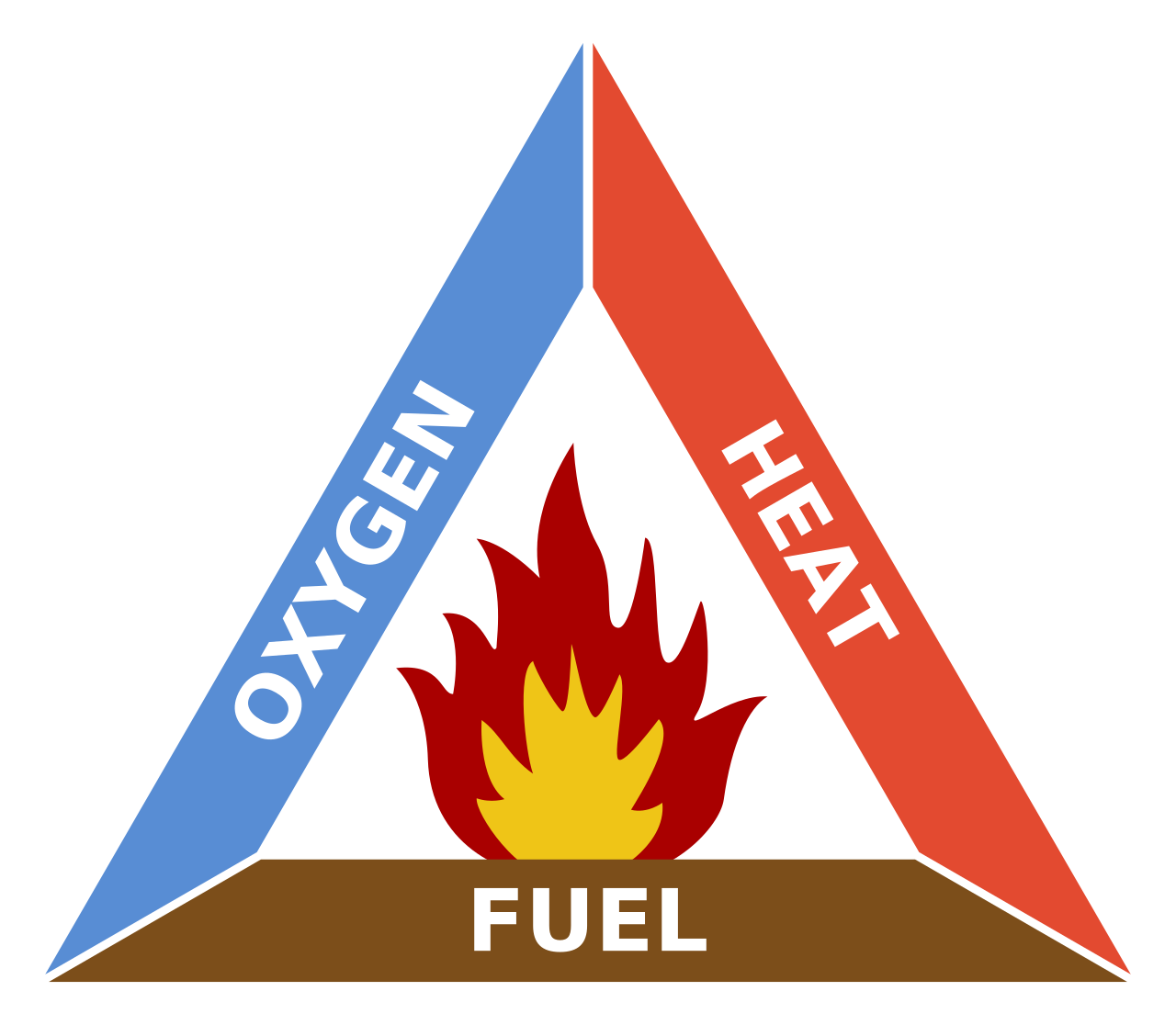
Heat + Fuel + Oxygen
Fires require three distinct elements to survive. Remove just one, and the chemical chain reaction collapses instantly. This is the foundation of all fire suppression tactics.
- Heat: The energy required to raise the fuel to ignition point. Extinguishers like water attack this by cooling.
- Fuel: Any combustible material (solid, liquid, or gas). Moving or isolating fuel starves the reaction.
- Oxygen: The catalyst sustaining combustion. Gas agents like CO₂ work directly by displacing this ambient oxygen.
Audio Narrative: More about the Fire Triangle
Have a listen or watch this brief overview about how a fire sustains itself and how best it can be extinguished.
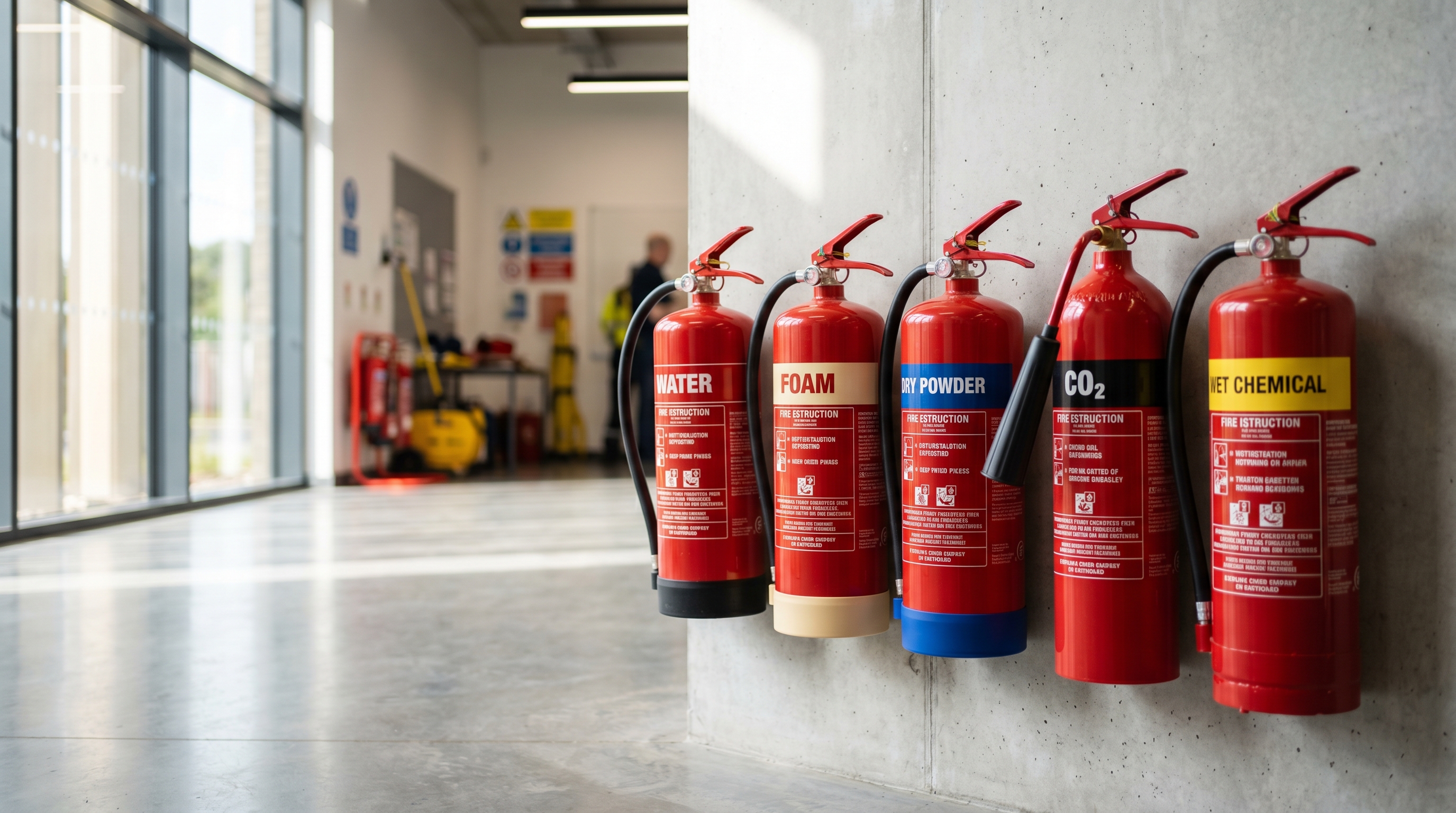
Extinguisher Identification Matrix
| Type | UK Color Band | Best Used On | NEVER Use On |
|---|---|---|---|
| Water | Solid Red | Wood, Paper, Textiles | Electrical Hazards, Flammable Liquids |
| CO2 Gas | Black Band | Live Electrical, Flammable Liquids | Confined Spaces, Deep Fat Fryers |
| Foam | Cream Band | Wood, Paper, Flammable Liquids | Domestic Cooking Fires, Live Circuits |
| Dry Powder | Blue Band | Liquids, Gases, Electrical Hazards | Indoor Spaces (Destroys All Visibility) |
| Wet Chemical | Yellow Band | Cooking Oils & Deep Fat Fryers (Class F) | Live Electrical Hazards |
The 2 Rules of the Attack
Now you have the right extinguisher in your hands. But before you take a single step towards the fire, you must execute these two tactical rules:
The "Test Squirt"
Test the equipment first. Give the operating lever a brief, sharp squeeze before you approach the fire. You need to guarantee the cylinder has pressure and the valve functions. Never walk into a smoke zone only to discover a faulty or leaked extinguisher.
Anchor Your Exit
Never let the fire get between you and the exit. Always fight a fire with your back explicitly facing an open, unobstructed door. If the fire suddenly flares up or flashes, your escape route is completely clear to step backward out of danger immediately.
How to Operate: Best to remember the PASS System
When under stress, follow these four physical mechanics precisely.
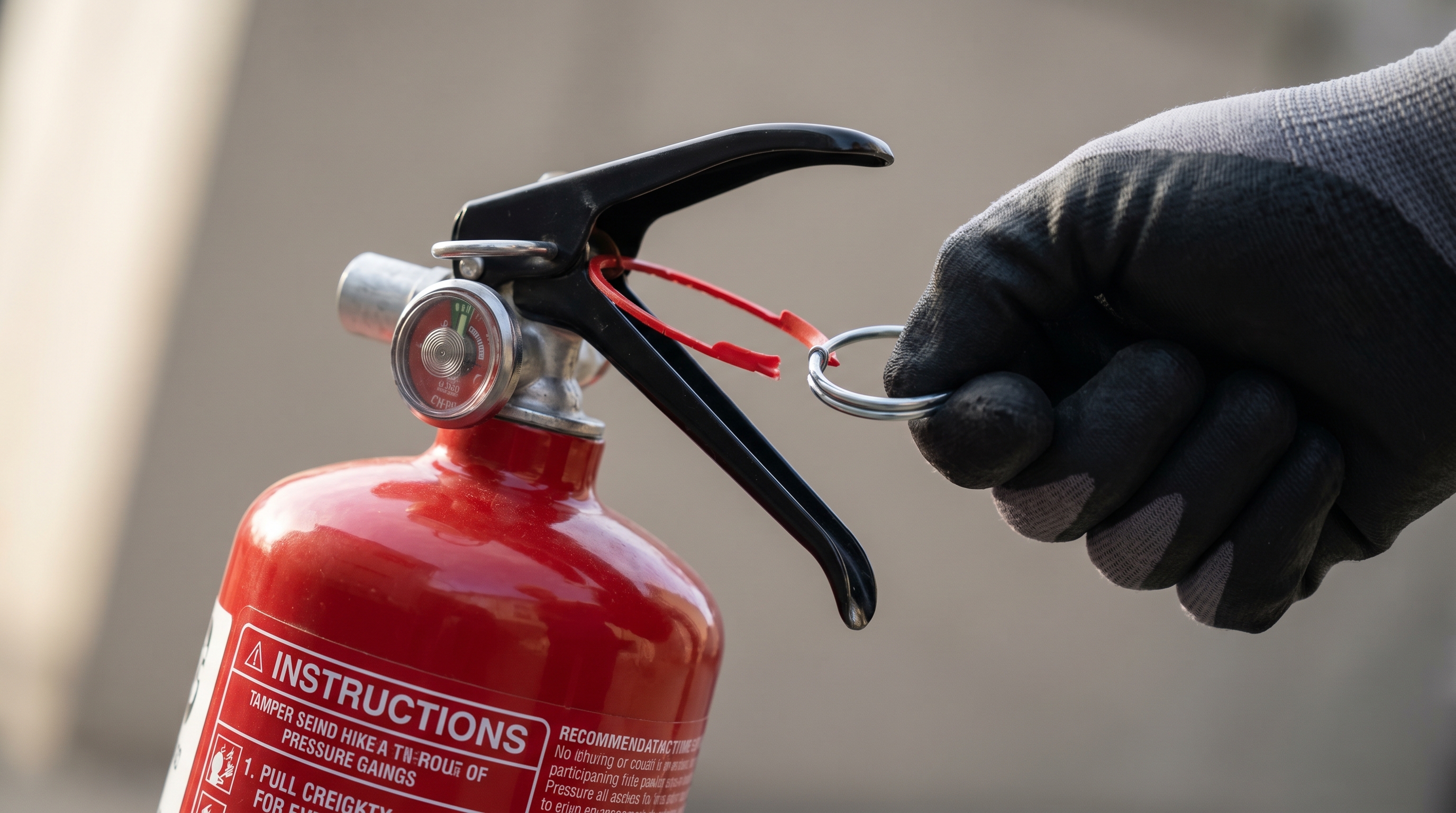
Pull the Pin
Hold the cylinder upright. Grip the plastic safety ring firmly and pull it straight out. This breaks the plastic tamper seal and mechanically unlocks the operating lever.
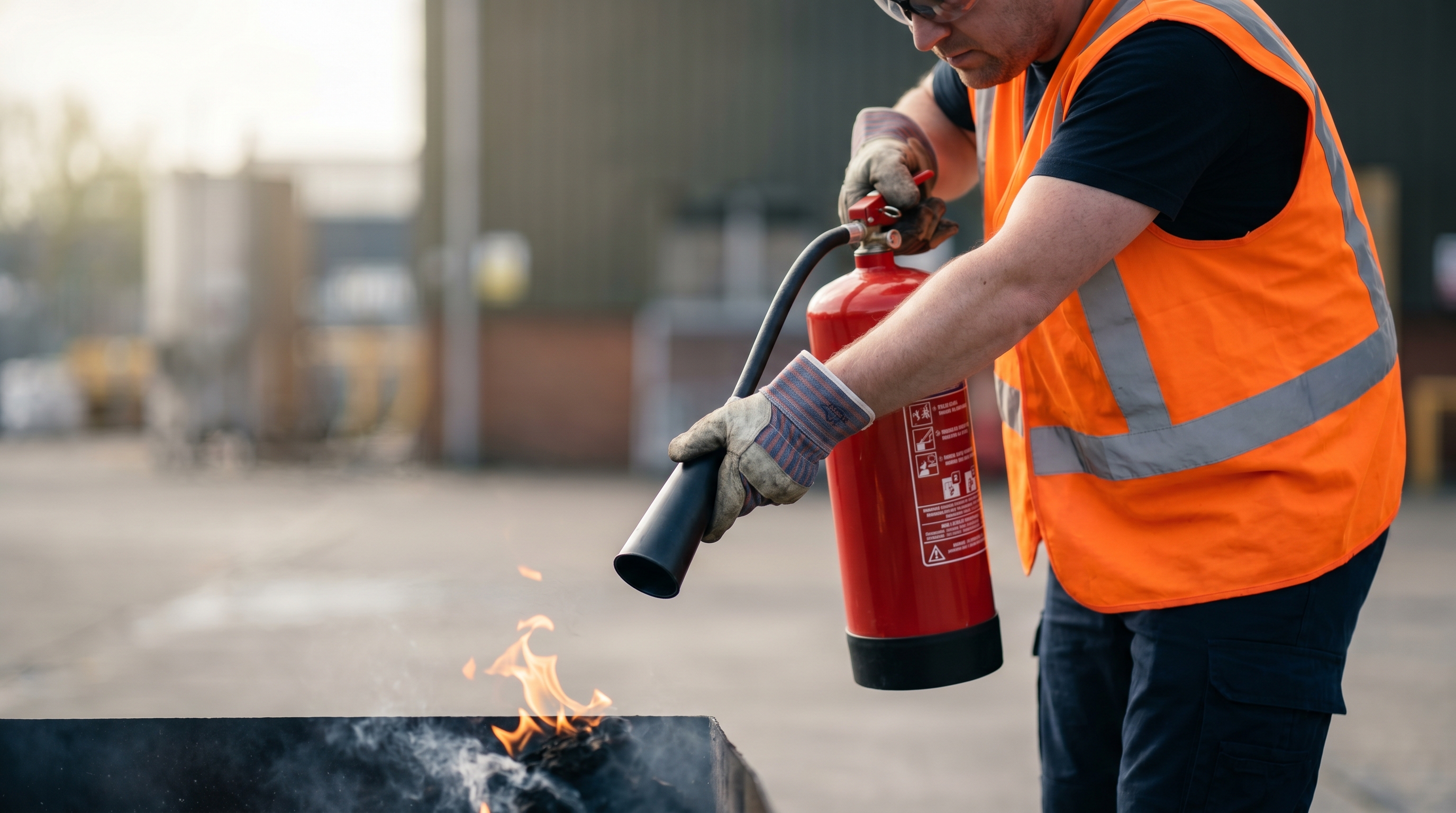
Aim Low
Grip the heavy nozzle or horn firmly. Point it directly at the root or base of the fire. Spraying into the flames does nothing; you must hit the actual fuel source.
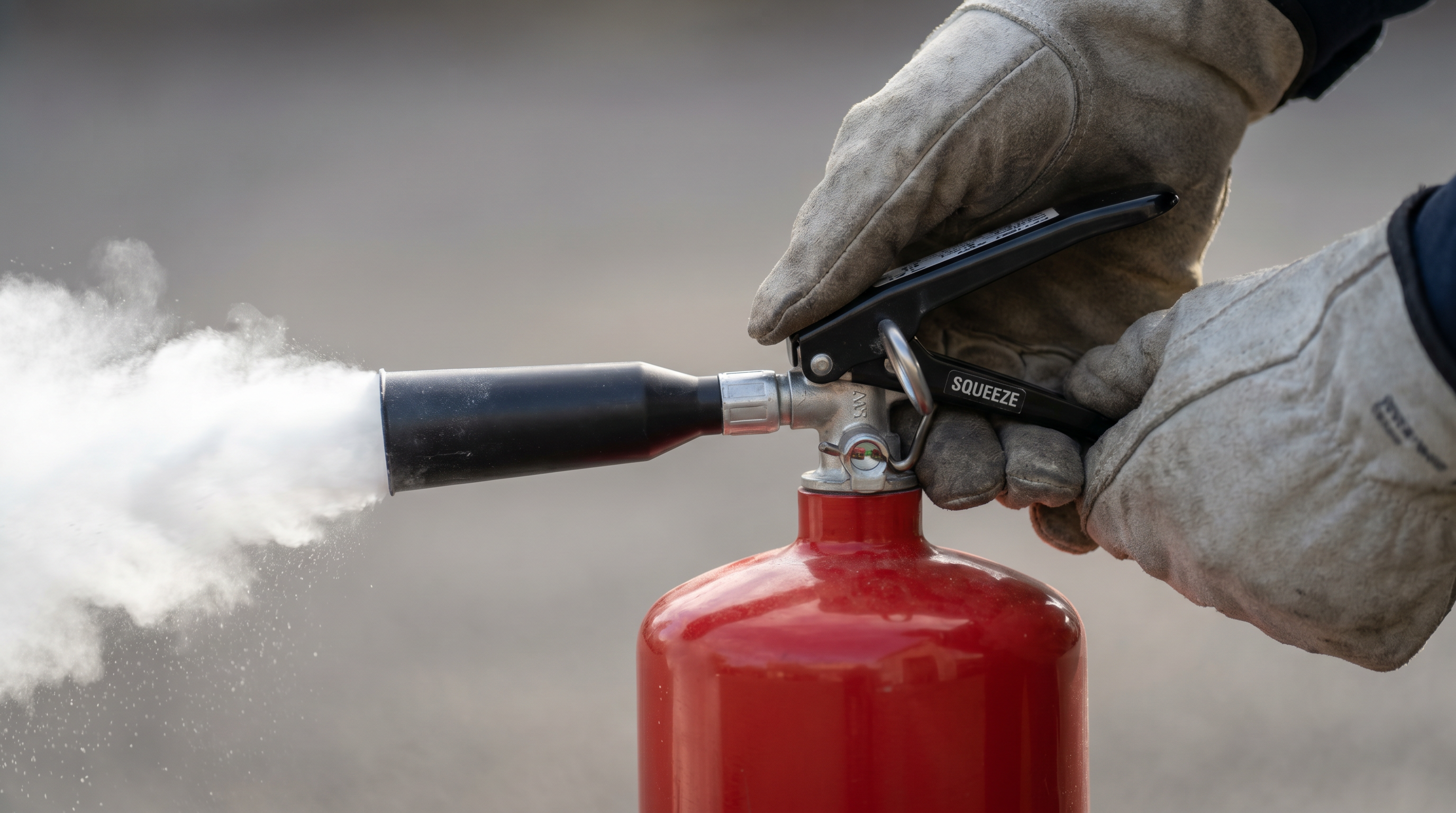
Squeeze the Lever
Squeeze the top operating lever smoothly down toward the carrying handle. This opens the internal valve and releases the pressurized agent. Releasing your grip immediately halts the flow.
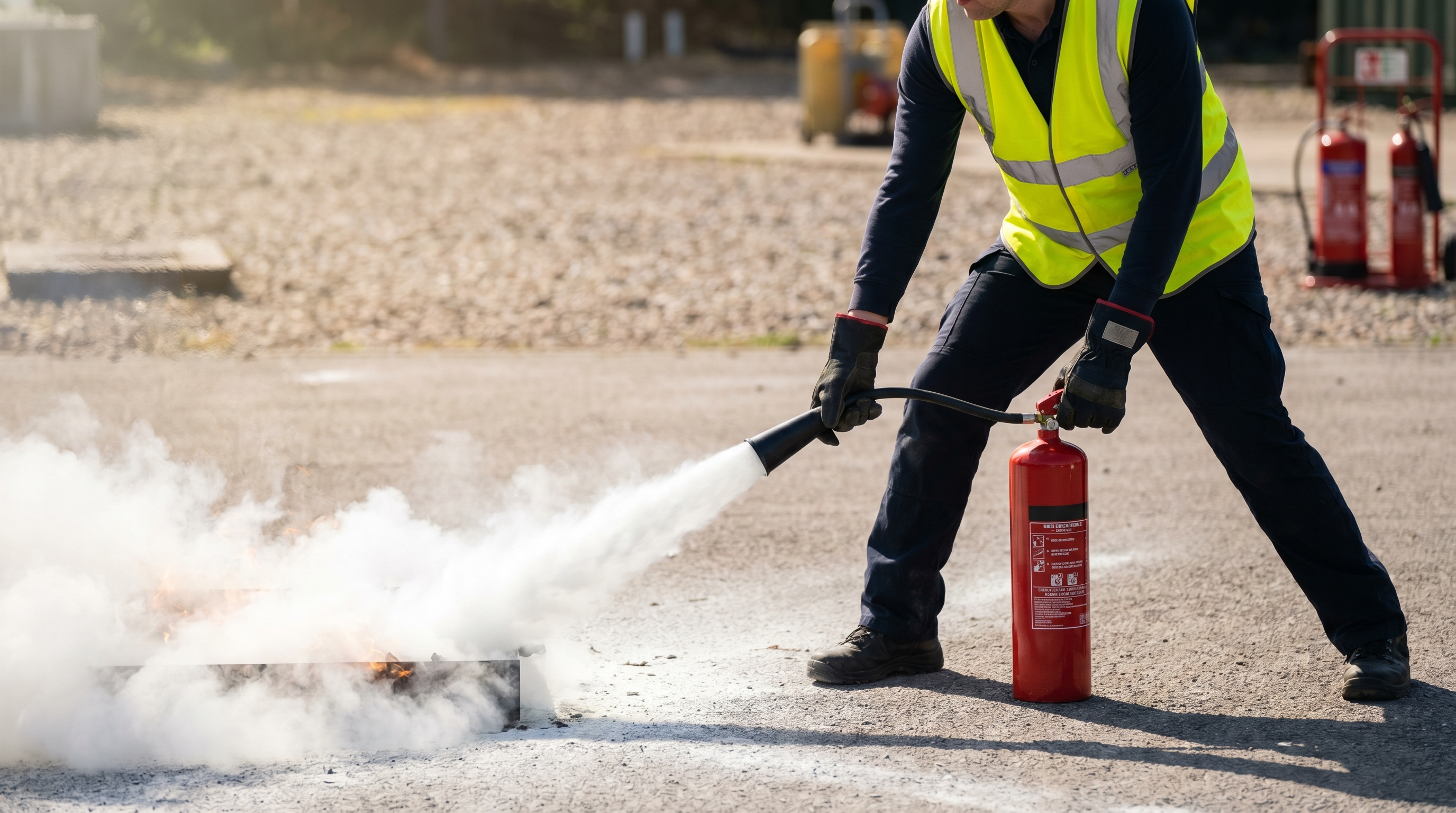
Sweep Side to Side
Move the nozzle back and forth smoothly across the footprint of the fire. As the flames recede, step forward carefully while keeping your aim low. Watch the area closely for any signs of re-ignition.
Final Verification Challenge
1. You are fighting a small electrical hazard inside a tight, enclosed server closet. Why is a Dry Powder extinguisher a major hazard choice here?
⚠️ Critical Safety Protocol
Never attempt to fight a workplace fire if it is larger than a standard domestic wastepaper bin, if your escape route is compromised, or if you do not have the exact correct extinguisher type ready.
SBT Module: Fire Extinguisher Awareness Complete
You have analyzed live baseline threat metrics, completed localized checklist configurations, and run knowledge-gated evaluation variables.